
Vinyl vs Wood Fence: Which Is Best for Your New Jersey Home?
Vinyl and wood are the two most popular privacy fence options for New Jersey homeowners. Both deliver complete privacy, look great when installed correctly, and work in nearly any residential setting. The question is which one fits your home, your budget, and your tolerance for maintenance. After 20+ years installing both, here's the honest answer.
Quick Comparison: Vinyl vs Wood at a Glance
Before diving into the details, here's a side-by-side comparison of the key differences between vinyl and wood privacy fencing in New Jersey. This table summarizes what we'll explore in depth below.
| Feature | Vinyl Fence | Wood Fence |
|---|---|---|
| Upfront Cost | $30–$60 per ft | $20–$45 per ft |
| Lifespan | 25–30+ years | 15–25 years |
| Annual Maintenance | None required | Stain every 2–4 years |
| 20-Year Total Cost | Material cost only | +$2,000–$4,000 in maintenance |
| Weather Resistance | Excellent | Good with maintenance |
| Privacy Level | Complete | Complete |
| Customization | Limited colors/styles | Unlimited stain options |
| Eco Profile | Petroleum-based, long-lasting | Renewable, biodegradable |
Upfront Cost: Wood Usually Wins
If your primary concern is initial budget, wood typically wins the upfront cost comparison. Pressure-treated pine privacy fencing runs $20 to $35 per linear foot installed in New Jersey. Cedar costs more, usually $30 to $45 per linear foot for the same installation.
Vinyl privacy fencing starts around $30 to $40 per linear foot for standard quality and can reach $60 per linear foot for premium thick-wall panels with extended warranties. So vinyl is typically 30 to 50 percent more expensive than equivalent wood fencing at the time of installation.
However, this is where the cost analysis gets interesting. Upfront cost is only one piece of the financial picture, and the gap between vinyl and wood often closes (or reverses) when you factor in long-term maintenance and replacement costs.
Long-Term Cost: The 20-Year Picture
A 150-foot vinyl privacy fence at $45 per foot costs $6,750 installed and requires essentially no maintenance for its 25 to 30 year lifespan. Total 20-year cost: approximately $6,750.
A 150-foot pressure-treated wood privacy fence at $30 per foot costs $4,500 installed. Over 20 years, you'll typically stain or seal it 5 to 7 times at $400 to $600 each time (materials plus labor), adding $2,000 to $4,000 in maintenance. Total 20-year cost: approximately $6,500 to $8,500.
Over 20 years, vinyl and wood often cost approximately the same total amount. Vinyl trades upfront cost for zero maintenance. Wood trades lower upfront cost for ongoing labor and material expenses. Your choice often comes down to cash flow preferences and how you value time.
Durability in New Jersey's Climate
New Jersey's climate is genuinely hard on outdoor materials. Humid summers, freezing winters, heavy snow loads, salt air in coastal areas, and aggressive freeze-thaw cycles all attack fence materials in different ways. Understanding how each material handles NJ weather helps you make a smarter choice.
How Wood Performs in NJ Weather
Pressure-treated pine typically lasts 15 to 20 years in New Jersey with proper maintenance, less if you skip staining and sealing. Cedar runs 20 to 25 years thanks to its natural rot resistance. Poorly maintained wood can fail in under 10 years, especially the posts, which usually rot first at the soil line.
Wood's main weather enemies in NJ are sustained moisture, freeze-thaw cycles that expand water inside the wood and create cracks, UV damage that breaks down stains and sealants, and termites in older neighborhoods. Regular maintenance addresses all of these, but the maintenance itself is a real commitment.
How Vinyl Performs in NJ Weather
Quality vinyl fence panels in NJ routinely last 25 to 30+ years with virtually no maintenance. The material resists fading thanks to UV inhibitors built into the panels, doesn't absorb water (so freeze-thaw cycles don't damage it), won't rot from humidity, and resists insect damage completely.
Vinyl's weak point is extreme impact. A baseball, fallen branch, or vehicle impact can crack panels in ways that wood would simply dent or splinter. Replacing a single damaged vinyl panel is straightforward if you have the manufacturer's matching profile, but discontinued styles can be impossible to match perfectly.
Maintenance Requirements Compared
This is where vinyl and wood diverge most dramatically. Maintenance is not just a financial consideration; it's a lifestyle consideration. Some homeowners enjoy the ritual of staining wood every few years. Others actively avoid yard work and want a fence they can install and forget about.
Wood Fence Maintenance Schedule
A typical wood fence in New Jersey needs the following maintenance to reach its expected lifespan:
- Year 1: Initial sealing or staining 3 to 6 months after installation
- Every 2–4 years: Re-stain or re-seal all exposed wood surfaces
- Every 5–7 years: Inspect posts at soil line and replace any showing rot
- Annually: Check hardware (hinges, latches, fasteners) and tighten or replace as needed
- After major storms: Inspect for cracked boards, damaged sections, and post movement
Vinyl Fence Maintenance Schedule
Vinyl maintenance is dramatically simpler:
- Twice yearly: Rinse with a garden hose to remove dirt and pollen
- As needed: Clean stubborn stains with mild soap and a soft brush
- Every 5–10 years: Tighten any loose hardware (much less frequent than wood)
- After major storms: Inspect for impact damage and replace damaged panels
Still Deciding? Let's Walk Your Property
Sometimes the right choice becomes obvious once you see real samples on your own property. Our free estimate visit includes material samples in hand, honest pros and cons for your specific situation, and a written quote for both options if you want to compare.
Aesthetic Options and Curb Appeal
Beyond function and finances, your fence is also part of your home's curb appeal. Both materials offer distinct aesthetic profiles that suit different home styles and personal preferences.
Wood Fence Aesthetics
Wood looks natural and classic. Real wood grain, the ability to stain in any color or leave it natural, and the option to refinish later if you change your mind give wood unmatched flexibility. Cedar develops a beautiful silver-gray patina over time that many NJ homeowners specifically choose for.
Traditional New Jersey neighborhoods, historic homes, and rustic settings often look better with wood. Custom designs are easier to execute with wood since panels can be built on-site to any height, picket spacing, or decorative pattern.
Vinyl Fence Aesthetics
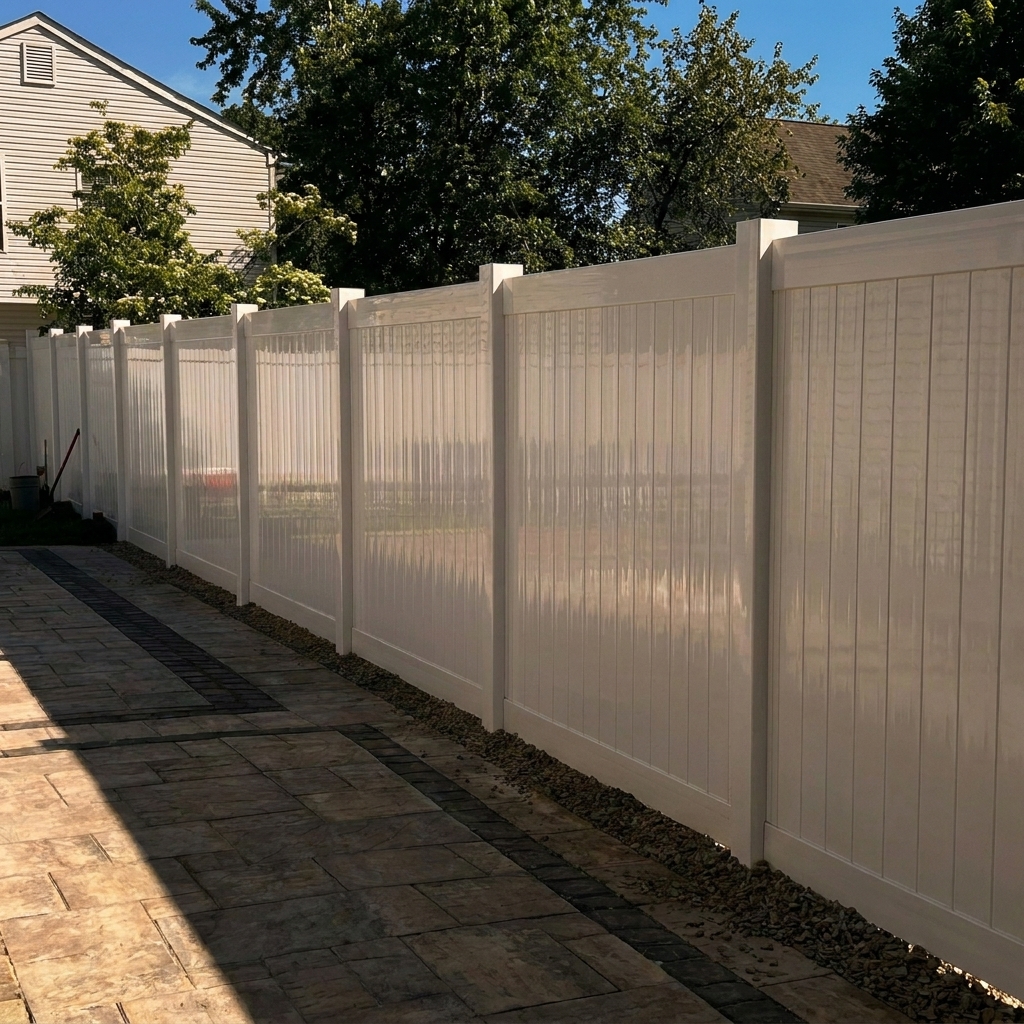
Vinyl looks clean and consistent. The uniform color stability means your fence looks the same year after year, which appeals to homeowners in newer developments and HOA-governed neighborhoods where conformity matters.
Modern vinyl options include woodgrain finishes that genuinely look like real wood from a few feet away. Color choices include white, tan, gray, almond, and various woodgrain patterns. The trade-off is less customization flexibility compared to wood; you choose from manufacturer offerings rather than designing from scratch.
Privacy and Sound Blocking
Both materials provide complete visual privacy when installed as solid panel privacy fences. The aesthetic styles available in solid panel configurations include board-on-board wood, shadowbox wood, standard vertical-board wood, solid vinyl panels, and tongue-and-groove vinyl panels.
For sound blocking, denser materials work better. Solid vinyl panels actually slightly outperform standard wood for sound absorption because the closed cell structure of vinyl is denser than typical fence-grade wood. The difference is small but measurable for properties near busy roads. For maximum sound blocking, board-on-board wood (which has overlapping boards) approaches vinyl performance while offering more visual character.
Environmental Impact Comparison
Environmental considerations matter to many New Jersey homeowners. Both materials have legitimate sustainability arguments and real environmental trade-offs.
Wood's Environmental Profile
Wood is a renewable resource that biodegrades naturally at end of life. Sustainably harvested cedar and FSC-certified lumber options minimize environmental impact during sourcing. However, pressure-treated wood contains chemicals that require careful disposal, and the staining maintenance involves chemical products that have their own environmental footprint over the fence's lifetime.
Vinyl's Environmental Profile
Vinyl is petroleum-based and not biodegradable, which is a real environmental concern. However, its 25 to 30+ year lifespan means significantly less material is used per year of service compared to wood fences that get replaced more frequently. Modern vinyl is also increasingly recyclable, though recycling infrastructure varies by region.
Resale Value: Which Adds More to Your Home?
Real estate data from New Jersey markets suggests both materials add similar value when professionally installed. The key variables for resale value are installation quality (poorly installed fences can hurt resale regardless of material), maintenance condition (a well-maintained wood fence beats a faded or damaged vinyl one), match with neighborhood aesthetics (in some areas, wood is expected; in others, vinyl is preferred), and remaining lifespan (newer fences add more value than older ones).
The honest answer: neither material dramatically outperforms the other for resale value. Both are seen as positive features by NJ buyers when installed correctly and maintained well.
When to Choose Vinyl
Vinyl is the better choice for New Jersey homeowners who match most of these conditions:
- You want zero ongoing maintenance commitment
- You plan to stay in your home for 10+ years
- You live in coastal NJ where salt air degrades wood faster
- Your HOA or development prefers uniform clean aesthetics
- You value time more than upfront cost savings
- Your fence is in heavy sun exposure where wood degrades quickly
When to Choose Wood
Wood is the better choice for New Jersey homeowners who match most of these conditions:
- Budget is tight and upfront cost is the primary concern
- You want a natural traditional appearance
- You don't mind (or enjoy) periodic staining as homeowner maintenance
- Your home is older, historic, or in a traditional NJ neighborhood
- You want maximum customization flexibility for design
- You prefer renewable materials for environmental reasons
Our Honest Recommendation
Both vinyl and wood are excellent choices when installed correctly. The real risk for New Jersey homeowners is hiring an unlicensed contractor who cuts corners on post depth, hardware quality, or material grade. A poorly installed premium vinyl fence will fail faster than a well-installed pressure-treated wood fence.
If you're staying in your home long-term and want a "set it and forget it" solution, vinyl makes excellent financial sense over 20+ years. If you value the natural look of real wood and don't mind periodic maintenance, wood remains a perfect classic choice for NJ homes.
Whichever material you choose, work with a licensed and insured fence contractor who pulls permits properly, uses quality hardware, and stands behind their workmanship with a real warranty. Browse our vinyl fence services or wood fence services for more details on each material, or read our full fence cost guide for current 2026 pricing.
Frequently Asked Questions
Does vinyl really last longer than wood in New Jersey?
Yes, quality vinyl typically lasts 25 to 30+ years in NJ with no maintenance, while wood lasts 15 to 25 years with regular staining and sealing. The lifespan gap widens in coastal NJ areas where wood degrades faster due to salt air exposure.
Can I paint a vinyl fence to change the color?
Technically yes, but it's not recommended. Vinyl is designed not to be painted, and most paints will peel within 1 to 2 years. If you want a different color, order vinyl with the finish you want from the start, which costs less than repainting in the long run.
How often do I really need to stain a wood fence?
Plan to stain or seal a wood fence every 2 to 4 years in New Jersey. Coastal areas and homes with full sun exposure may need annual maintenance. Skipping maintenance dramatically shortens the fence's lifespan, often by 5 to 10 years compared to properly maintained installations.
Will a vinyl fence look out of place on an older NJ home?
It depends on the style choice. Modern bright white vinyl can look out of place on Victorian or Colonial homes. Woodgrain vinyl finishes and earth-toned options (tan, gray) blend better with traditional NJ architecture. We bring samples to your free estimate visit to compare options in person.
Is vinyl fence more eco-friendly than wood?
The environmental comparison is nuanced. Wood is renewable and biodegradable, but requires ongoing chemical maintenance. Vinyl is petroleum-based but lasts much longer per installation and produces less waste over its lifetime. Both materials have legitimate environmental trade-offs.